Guest lectures (October 2025)

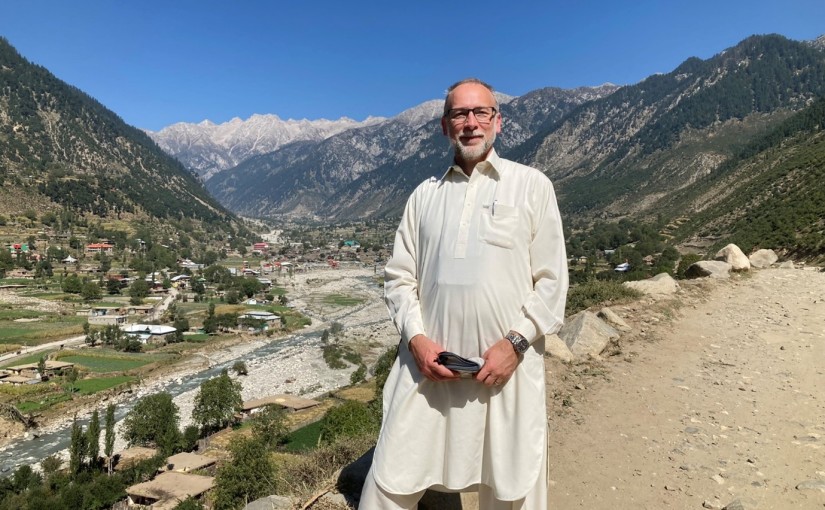
We will start the academic year with two guest lectures by Prof. Henrik Liljegren from Stockholm University. Prof. Liljegren is a world-leading specialist in Hindukush languages. He has worked extensively on the documentation of languages in Pakistan and is the author of numerous publications, including a grammar of the Palula language.

Time: 6.10.2025 9.45-11.15; 11.30-13.00
Place: Collegium Novum; Room: C1

Abstract: Exploring undocumented and underdocumented languages in the Hindu Kush

In this module, I address some challenges and opportunities in exploring the linguistic worlds in the rugged Hindu Kush–Karakoram mountains of northern Pakistan and surrounding areas. It builds on more than 20 years of personal experience in fieldwork, documentation and description as well practical applications in developing written languages and in building regional awareness and capacity in community research. Some of the topics covered are: an overview over the linguistic landscape with more than 50 distinct languages; some crucial steps involved in pioneering fieldwork in the region; how language documentation can be done with and by the communities themselves; hands-on examples of interesting linguistic properties and some areal features; and illustrations of how language typology and modern methods can inform and aid systematic exploration and description of unusual linguistic phenomena.

Welcome!
For our new students

You can print out a confirmation in the enrollment system or ask for a signed one, which will be sent to you by post. See Step 4 in the guide here: https://amu.edu.pl/en/admissions/full-study-programs-online-enrollment-system

Details for paying the tuition fee may be seen in USOS. To enter this system, do the following:

When you open your applicant account on https://rekrutacja.amu.edu.pl/, you should see the details of your student account. You are supposed to set a password for your student email (the one that ends with @st.amu.edu.pl). Once you have set a password, you can access USOSweb and Microsoft Teams using the same student email and password. Then go to https://usosweb.amu.edu.pl/kontroler.php?_action=news%2Fdefault&lang=en.

You can also find information in the students’ intranet, to which you’ll find a link (besides other useful information) on this site: https://amu.edu.pl/en/education

Also check out the Welcome Center:
https://amu.edu.pl/en/main-page/welcome-center

How can I prepare for the studies?

Although ELLDo is a master program in linguistics, not all our students have studied linguistics or philology in their undergraduate programs.

Students with little or no background in linguistics are recommended to get some basic knowledge before starting the program, and to continue catching up in core areas such as phonetics and morphology during their first year.Here are some recommendations for resources with which you may work on your own.

http://languagesindanger.eu/ A site made by a team at Adam Mickiewicz University (some of them are your teachers in ELLDo). It includes a textbook for young people with no prior knowledge of linguistics in English and Polish (“Book of Knowledge”) – a Turkish version will be available in autumn 2022, and some exercises with which you can explore lesser known languages (“Interactive Map”).

Textbooks for beginners

There are very many introductions to linguistics – browse the Internet and your library catalogue for descriptions and recommendations. The following three examples from Cambridge University Press give an overview of various fields of linguistics and are accessible to “absolute beginners”.

  • Bruhn de Garavito, Joyce, and John W. Schwieter, eds. 2021. Introducing Linguistics: Theoretical and Applied Approaches. Cambridge University Press. https://doi.org/10.1017/9781108696784
  • Genetti, Carol. 2018. How Languages Work: An Introduction to Language and Linguistics. 2nd ed. Cambridge University Press. https://doi.org/10.1017/9781108553988.
  • Yule, George. 2020. The Study of Language. Seventh edition, Cambridge University Press. https://doi.org/10.1017/9781108582889

Open Access:

Some textbooks we use in our classes

  • Litosseliti, Lia, ed. 2010. Research Methods in Linguistics. London; New York: Continuum.
  • Meyerhoff, Miriam, Laurel MacKenzie, and Erik Smachleef. 2015. Doing Sociolinguistics: A Practical Guide to Data Collection and Analysis. Abingdon; New York: Routledge.
  • Velupillai, Viveka. 2012. An Introduction to Linguistic Typology. Amsterdam: John Benjamins Publishing Company.

Also recommended: find some linguistic blogs (for example, here: https://blog.feedspot.com/linguistics_blogs/) or podcasts, for example:
https://lingthusiasm.comhttp://talkthetalkpodcast.com/
https://theworld.org/categories/world-words
https://www.accentricity-podcast.com/
https://fieldnotespod.com/

AMU Welcome Center

Welcome Centre is a point of contact for foreign AMU guests and AMU international students. They are ready to help you with a wide range of practical issues related to your stay in Poznań and studying at our University. Make sure to follow their webpage to find lots of practical information and keep up with many events for AMU international students!

Website
FB

Email: welcome@amu.edu.pl

It’s not the OED but…

…our students enjoyed making their own dictionary during the class on lexicography. Here are some of the remarkable results:

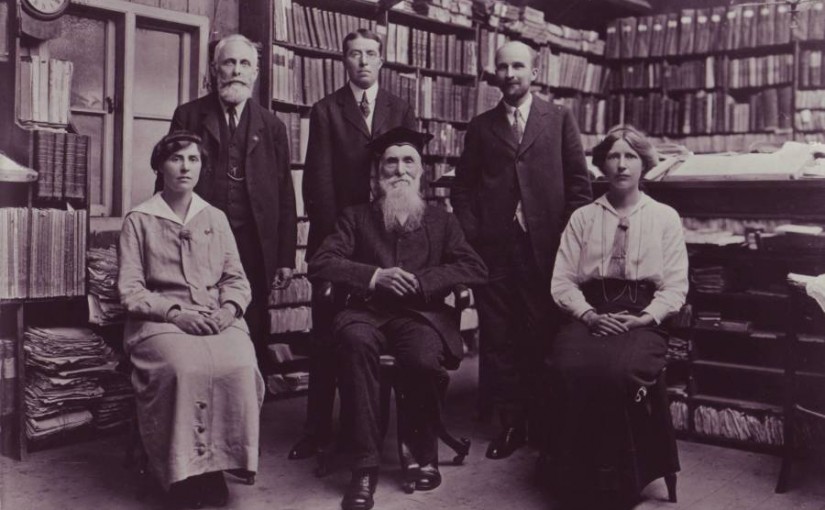
(Picture: The team of the Oxford English Dictionary in 1915, from the OUP achive, but found here: https://allthatsinteresting.com/oxford-english-dictionary-history)

Where is professor Wicherkiewicz?

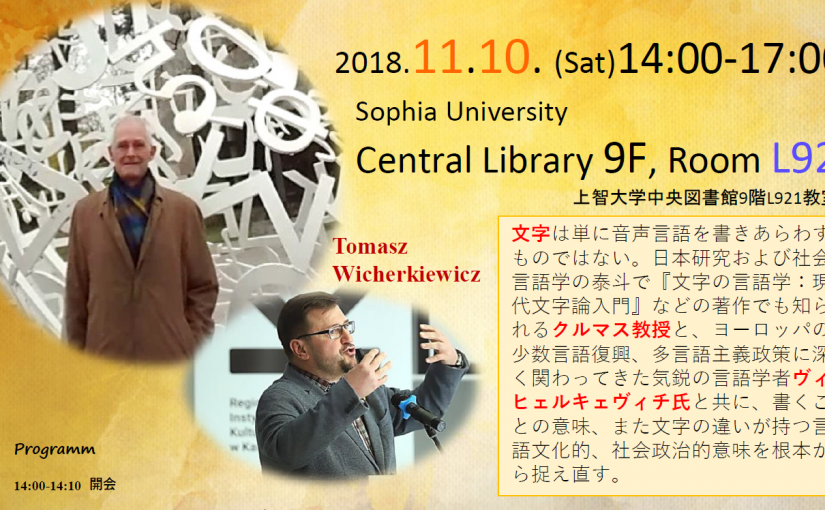
This winter semester ELLDo had to start without him: Professor Wicherkiewicz is currently on a research stay in Japan. From July 2018 to February 2019 he is Specially Appointed Professor at the Slavic-Eurasian Research Center of Hokkaido University in Sapporo. His research project concerns writing systems, scripts and orthographies in Central and Eastern Europe from the point of view of sociolinguistics, language contact and language policy. He is giving lectures in Russian and English, for example on Russian Old Believers in Poland (Русские старообрядцы в Польше как периферийное этноконфессиональное (и языковое) микрообщество) and, in an upcoming event, on writing and identity:
Sophia Nov2019 FCoulmas TWicherkiewicz

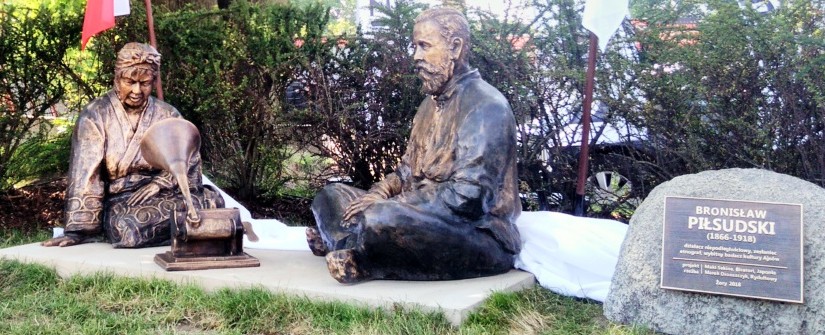
A monument to language documentation

This newly unveiled monument in front of the Town Museum in Żory (Silesia) is probably the very first monument to Language Documentation in Poland! It shows the Polish ethnographer Bronisław Piłsudski with an Ainu informant and a wax cylinder recorder. The monument was designed by Ainu designer/sculptor Maki Sekine.

photo from: https://www.radio90.pl/pomnik-bronislawa-pilsudskiego-stanal-przed-muzeum-w-zorach.html

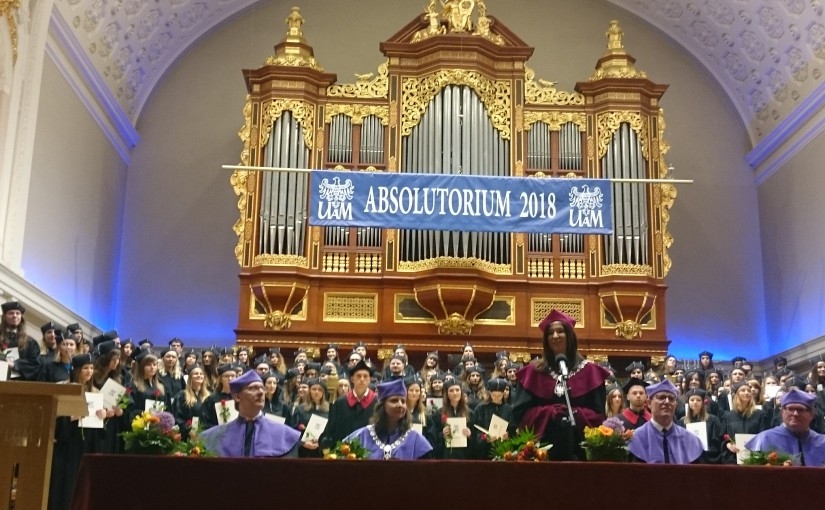
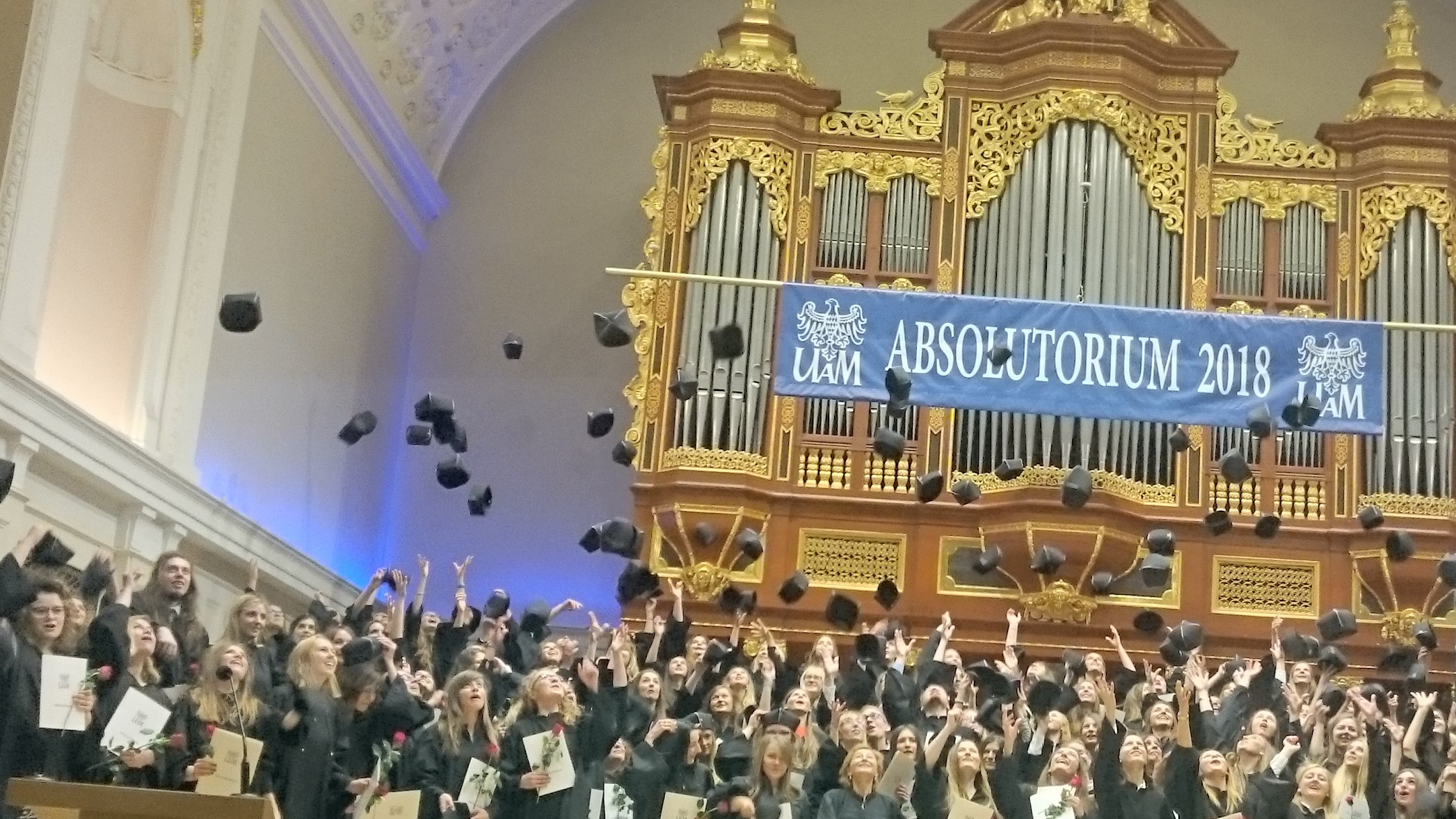
First ELLDo students get “absolutorium”

We have this nice tradition at our university that each year in May students who will finish their MA studies take part in a celebration called “absolutorium”. The term should not be taken too serious – there are still some exams ahead and MA theses to complete, but as students actually finish at various dates from mid June till the end of September we take this opportunity to celebrate together. So, this year the first generation of ELLDo students threw their hats into the air, and their teachers proudly cheered them on 19 May 2018.
(PS There are also 2 ELLDo teachers on the above picture – can you identify them?)

Absolutorium2018_hats